










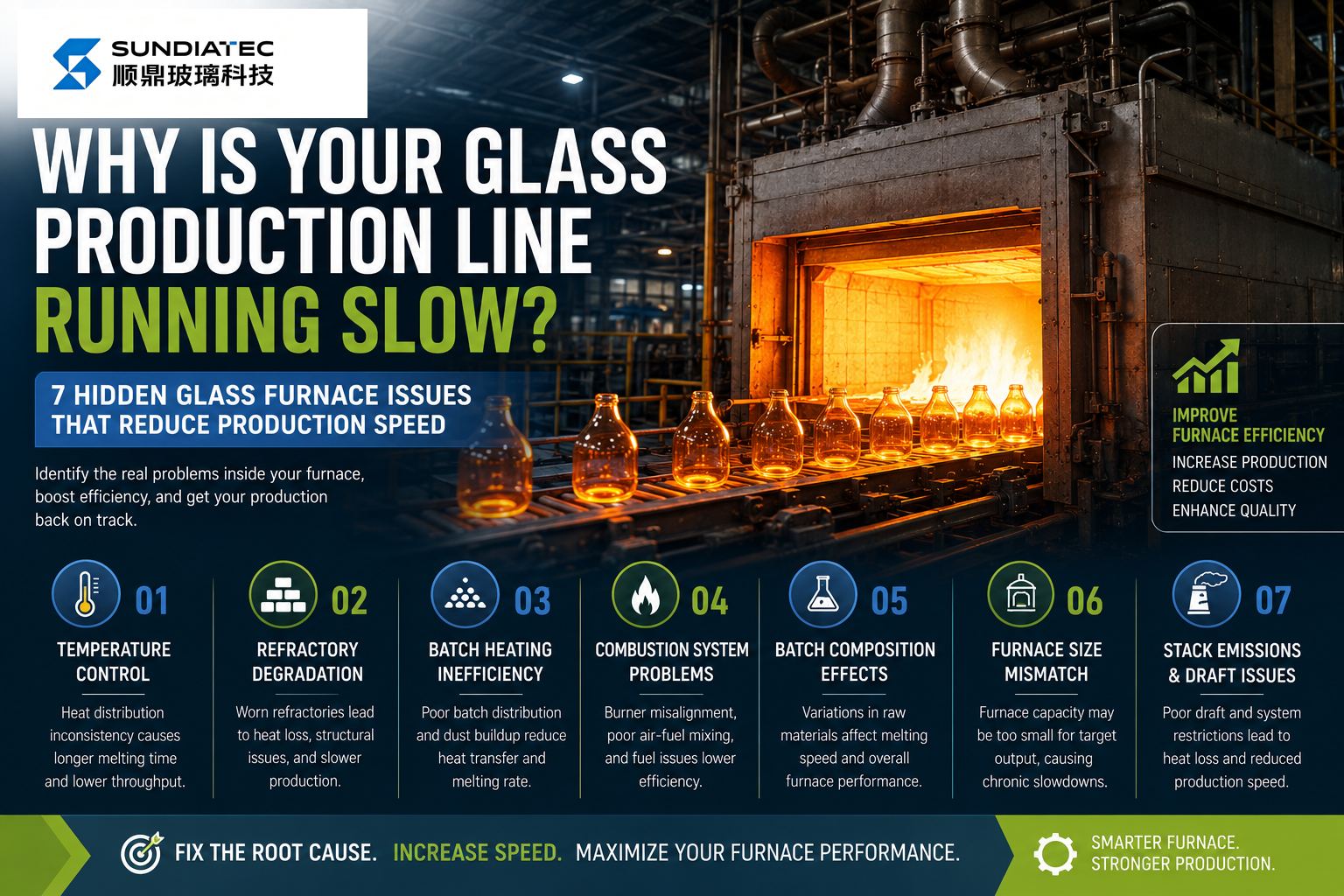
Industrial glass production depends on precise temperature control. When your glass furnace fails to reach target temperatures, production halts and costs skyrocket. We've helped manufacturers troubleshoot these issues for years, and the solutions are usually more straightforward than you'd think.
Why Temperature Control Matters in Glass Manufacturing
Glass furnace operations demand consistent, predictable heat. The melting process transforms raw silica, soda ash, and limestone into molten glass at temperatures between 1700°C and 2100°C depending on your glass type.
When your furnace underperforms, you're dealing with more than just wasted fuel. You face:
Extended melting cycles that delay production schedules
Poor glass quality with visible defects
Uneven thermal stress on furnace components
Increased wear on refractories and heating elements
Rising operational expenses that cut into profit margins
Most manufacturers don't realize they're losing money until the problem becomes critical. Early diagnosis saves both time and resources.
Common Causes of Temperature Shortfalls
Fuel Supply Issues
Inadequate fuel delivery stands as the primary culprit in most cases. Check your fuel system first.
Natural gas furnaces need consistent pressure. A pressure drop of even 10% reduces flame temperature significantly. Verify your gas line connections for leaks by using soapy water—bubbles indicate escaping gas. Inspect regulators for corrosion or damage that might restrict flow.
If you're using heavy fuel oil, viscosity problems plague many operations. Cold weather thickens oil, reducing flow rate through burners. Some facilities install preheating systems; others fail to maintain them properly. When oil isn't adequately heated before combustion, your furnace works harder but produces less heat.
Burner Blockage and Maintenance
Burner ports accumulate mineral deposits, soot, and residue over time. This buildup narrows the flame opening, directly reducing heat output. You might notice an orange or yellow flame instead of the bright blue color that indicates complete combustion.
Cleaning burners restores efficiency dramatically. Many operators skip this maintenance, thinking cost savings offset risks. They don't. Regular burner cleaning—typically quarterly or biannually depending on fuel type—prevents temperature loss and extends component life.
Refractory Deterioration
Your furnace walls are made from refractory materials designed to withstand extreme temperatures while retaining heat. Over years of operation, these materials wear down. Thermal cycling stresses the structure. Chemical reactions with molten glass gradually erode the lining.
When refractories fail, heat escapes through compromised sections. You maintain the flame, but the furnace environment cools. Thin or porous areas particularly struggle to retain temperature. A thorough interior inspection using thermal imaging reveals problem zones.
Air Infiltration Leaks
Modern furnaces seal tightly, but aging equipment develops cracks in the structure. Even small gaps admit cold air into the combustion chamber. This incoming air steals energy by requiring heating before it participates in combustion.
Common leak locations include furnace door seals, crown cracks, and side wall fissures. Run your hand around suspected areas during operation to feel air movement—safety first, of course.
Combustion Air Problems
Your burner needs adequate oxygen for efficient combustion. If fresh air intake is restricted, your fuel burns incompletely. This produces excess smoke, lower flame temperatures, and wasted fuel.
Blockages in air ductwork, clogged filters, or damper valve issues all restrict combustion air. Some facilities forget to open dampers after maintenance work. It sounds obvious, but we've seen production lines shut down for hours because someone closed an air damper and nobody remembered to reopen it.
Thermostat and Control System Failures
Modern furnaces rely on temperature sensors and control systems to maintain target heat. A faulty thermocouple or pyrometer gives false readings. Your furnace might be hitting temperature targets, but your sensor says otherwise.
Sensors experience two failure modes: drift and complete failure. Drift causes gradual inaccuracy—one degree here, three degrees there, until you're significantly off target. Complete failures often produce obviously wrong readings that seem too extreme to be real.
Calibration drift develops slowly. Annual thermocouple replacement and sensor calibration prevent this creep. Trying to save money by skipping this maintenance typically costs far more in lost production.
Diagnostic Steps You Can Take Today
Visual Inspection: Look for visible cracks, excessive soot buildup, or discolored refractory surfaces. These suggest specific problems worth investigating.
Fuel System Check: Confirm gas pressure at the regulator. For oil systems, check preheat temperature and line condition. Any hissing sounds indicate leaks.
Burner Examination: Remove and inspect burner tips. Clean or replace as needed. Flame color provides valuable information—adjust air/fuel ratios until you see a bright blue flame.
Temperature Measurement: Use a calibrated infrared thermometer or thermocouple to measure furnace temperature independently of your control system. Compare readings to sensor values.
Air Intake Verification: Visually inspect air ducts for obstructions. Ensure dampers are fully open during normal operation.
Professional Solutions That Work
Professional Refractory Repair
When deterioration extends beyond surface issues, professional refractory installation becomes necessary. Specialists measure wear patterns, recommend appropriate material types, and ensure proper installation. Modern refractory materials last significantly longer than older versions—newer compositions withstand chemical attack better and resist thermal cycling damage.
Burner Replacement or Refurbishment
Modern burner designs outperform older models substantially. Advanced burners achieve better flame stability, more complete combustion, and improved temperature control. If your burner is more than 15 years old, replacement often costs less than repeated repairs while improving efficiency 15-20%.
Combustion System Upgrade
Oxygen enrichment systems increase flame temperature without increasing fuel consumption. Preheated air systems reduce the energy needed to bring oxygen to combustion temperature. Both options require capital investment but deliver measurable fuel savings that recover costs within 2-3 years.
Control System Modernization
Replacing outdated analog controls with modern digital systems improves accuracy and responsiveness. New systems self-diagnose problems, log performance data, and often integrate with facility management systems. Real-time monitoring helps catch problems before they impact production.
Prevention: The Best Solution
The most effective approach combines regular maintenance with smart monitoring.
Monthly Tasks: Visual inspection of burners, fuel system connections, and refractory surfaces. Review flame color and combustion quality.
Quarterly Maintenance: Professional burner cleaning and inspection. Temperature sensor verification against independent measurement.
Annual Procedures: Thermocouple replacement and control system calibration. Comprehensive refractory assessment using thermal imaging.
Every 3-5 Years: Complete furnace inspection by qualified technicians. Evaluation of remaining refractory life and component condition. Planning for major upgrades or replacements.
This schedule prevents unexpected failures and maintains consistent temperature performance.
When to Call in Experts
You need professional assistance if temperature problems persist after checking obvious issues. Furnace operations involve hazardous conditions—extreme heat, toxic gas exposure, and heavy equipment. Improper diagnosis or repair attempts risk injury.
Specialists can perform thermal imaging to locate heat loss precisely. They operate gas analysis equipment to measure combustion efficiency. They interpret complex sensor data and identify control system faults. Their expertise saves time and prevents costly mistakes.

Unlock Your Exclusive Glass Production Solution!