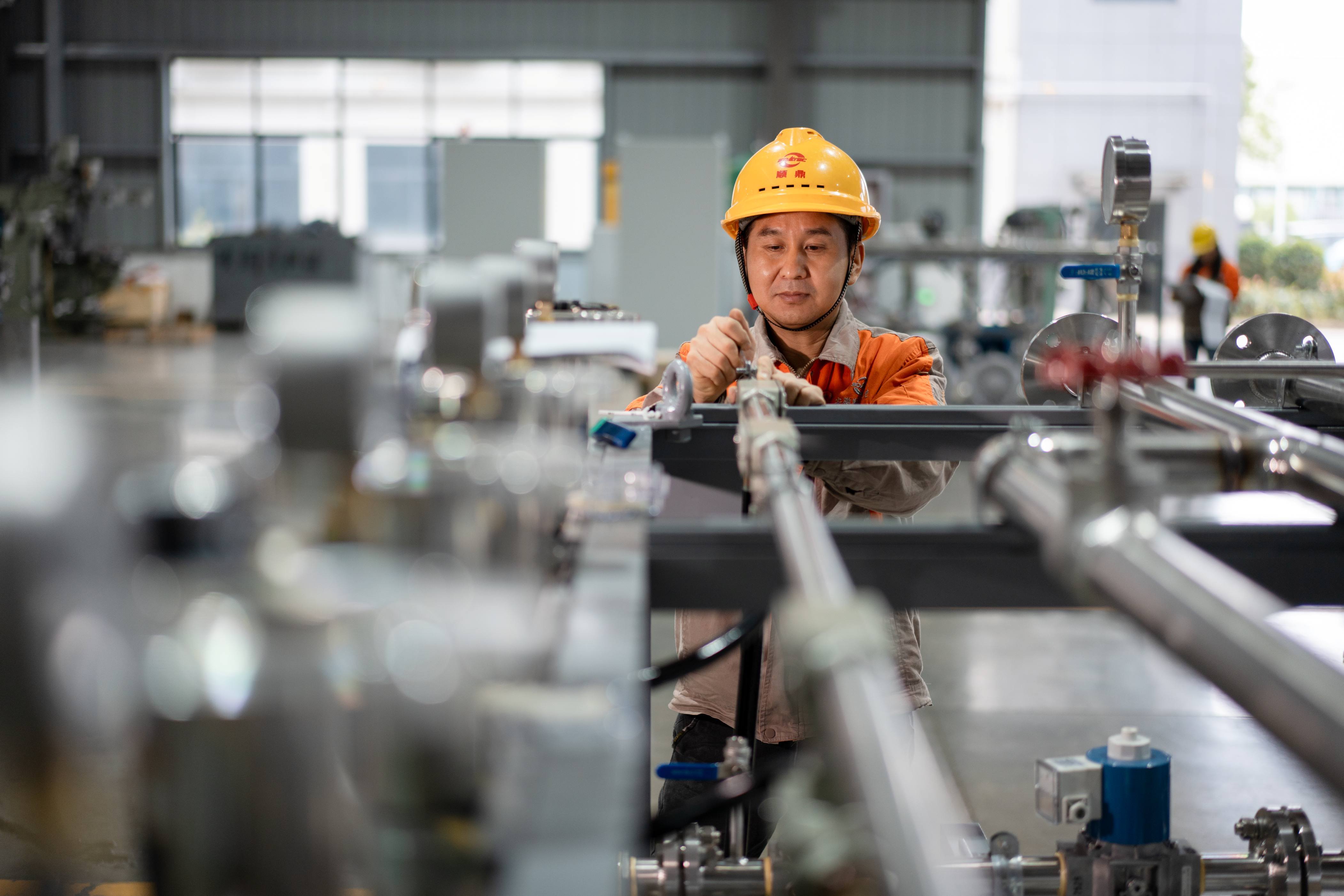
Original banner from Sundiatec’s glass wool production line page

Glass Wool Production Line & Equipment

Plan a glass wool production line around your product range, output targets and site conditions. Explore Sundiatec’s glass wool equipment for batching, melting, forming, curing and finishing, then discuss the configuration your project needs.

What Is a Glass Wool Production Line?

A glass wool production line turns a prepared glass batch into fiber insulation through melting, fiberizing, collection, forming, curing and finishing. Its equipment must work as one continuous process, with the final configuration determined by the intended rolls or boards, output targets and site conditions.

Glass wool belongs to the mineral wool family. It uses a different raw material composition and fiberizing route from a rock wool production line. The two processes need separate equipment and operating assessments.

Sundiatec glass wool production line equipment layout

Equipment Across the Glass Wool Production Process

Sundiatec’s published glass wool range connects the hot end with forming, curing and finishing equipment. The equipment below illustrates selected sections. Binder preparation, fiberizing, environmental systems and packing interfaces also belong in the project discussion.

From molten glass to a continuous wool mat

The forehearth conditions the glass melt before the fiberizing section converts it into fibers. Binder application and collection prepare the mat for curing. These stages must be coordinated: a larger melting output alone will not increase saleable finished output if forming, curing or finishing remains the limiting section.

01 / Raw Material Preparation

Automatic Batching System

Top view of the batching equipment published by Sundiatec

The batch plant for glass wool production lines weighs and feeds the raw material mixture for melting. Define the proposed batch composition, material characteristics, storage volumes and feed requirements together. Cullet preparation and handling should be included where relevant to the agreed process.

02 / Melting & Conditioning

Oxy-Fuel Furnace & Forehearth

Sundiatec rendering of the glass melting furnace arrangement

Sundiatec’s published hot-end range includes a melting furnace for glass wool lines using natural gas and oxygen combustion. The forehearth conditions the molten glass before fiberizing. Assess melting output, glass temperature and distribution together with the proposed energy supply and downstream fiber requirements.

03 / Fiber Collection

Ground Level Forming System

Ground level glass wool collector photographed in the workshop

The forming chamber for glass wool production lines collects the fibers and builds the initial wool mat. Sundiatec publishes a ground-level arrangement with a heavy structural frame and negative-pressure air ducts. Mat distribution, cleaning access and the handover to the curing section are part of the configuration review.

04 / Binder Curing

Curing Oven

Glass wool curing oven from the supplied equipment photographs

The curing oven heats the formed mat to cure the binder and establish the product structure. Oven length, conveying speed, product thickness and residence time must be assessed together. Sundiatec’s published oven range includes a 2.4 m wide configuration; the proposed project dimensions and acceptance conditions should be stated in the technical offer.

05 / Product Sizing

Thickness Saw & Cutting System

Glass wool thickness saw and conveying equipment in the workshop

The thickness saw shown is one part of the glass wool finishing section. Cooling, thickness cutting, edge trimming, longitudinal cutting and cross-cutting perform different tasks. Select the required combination around the finished product dimensions and downstream handling, with suitable extraction and access for maintenance.

06 / Roll Handling

Servo Pre-Press Roll-Up Machine

Sundiatec rendering of the servo pre-press roll-up machine

The roll-up section compresses and winds suitable glass wool products after curing and cutting. Agree the target roll dimensions, product recovery requirements and handling method before finalizing the arrangement. Film wrapping, pallet handling and other packing equipment need an explicit supply boundary rather than being assumed to be included with the winder.

Start with the Glass Wool Product You Need

Product specifications guide equipment selection. Discuss the intended product range before comparing line capacity, floor space or investment.

Rolls & Blankets

Define thickness, width, roll dimensions, handling and recovery after compression. Coordinate the wool mat, curing conditions, cutting and roll-up arrangement so the finished product can be stored and transported in its intended format.

Boards & Panels

Define density, thickness, dimensions, flatness and handling requirements. Review forming, curing, cooling and cutting as a connected system. Stacking, facing and packaging require confirmation against the agreed product and supply scope.

Inside the Manufacturing Workshop

Equipment assembly, fabrication, inspection and engineering activities.

Configure the Line Around Your Project

A useful proposal connects the required product with the process, utilities and delivery boundary. Use the same inputs when comparing equipment configurations.

Planning inputWhat to defineWhy it matters
Finished productsRolls or boards; density, thickness, dimensions and facing needsSets the basis for forming, curing and finishing.
Required outputSaleable finished output, operating schedule and product mixSeparates product output from melting rate or peak machine speed.
Raw materialsBatch composition, cullet availability and material handlingGuides storage, batching and melting assessment.
Energy & oxygenFuel, power, oxygen supply, tariffs and reliabilitySupports hot-end selection and a meaningful operating-cost review.
Factory conditionsAvailable layout, clear height, access and utility connectionsDefines equipment arrangement and installation interfaces.
Environmental systemsLocal limits, exhaust treatment, process water and binder handlingClarifies treatment responsibilities and utility requirements.
Delivery & acceptanceEngineering, manufacture, site work, commissioning and test conditionsMakes supply scope and performance evaluation comparable.

Check every proposed performance figure against a named equipment section, product specification and operating condition.

Agree the Supply Boundary Before Ordering

Identify who is responsible for the furnace, forehearth, fiberizing, forming and cold-end equipment. Then define interfaces with the building, power supply, oxygen system, exhaust treatment and control system.

For an existing-line upgrade, provide the current layout and operating data. The assessment should identify the constrained section and its effect on the rest of the line before selecting replacement machinery.

Compare proposals on a common basis

Use the same product specification, output target, utilities, installation boundary and acceptance test. Confirm the documentation, training, commissioning support and spare-part requirements in the agreed scope.

Glass Wool Production Line FAQs

What equipment is included in a glass wool production line?

A typical line connects raw material batching, melting, forehearth conditioning, fiberizing, collection and forming, curing, cooling, cutting and finishing. Roll-up and packing depend on the intended product. Binder preparation, exhaust treatment, process-water arrangements, utilities and control interfaces also need to be defined in the project scope.

Can the same line produce both glass wool rolls and boards?

Rolls and boards place different demands on mat formation, curing, product handling and finishing. Some equipment may serve both routes, but the achievable range depends on the actual configuration. Provide the intended density, thickness, dimensions and output for each product before agreeing whether one proposed line can meet both requirements.

How should glass wool line capacity be specified?

State the required saleable finished output together with the product specification, planned operating hours and acceptance conditions. Glass melting throughput, fiber output and packaged product output are different measures. Width and conveying speed alone do not establish annual capacity, and output comparisons should use a common product and operating basis.

How much does a glass wool production line cost?

The quotation depends on the product range, required output, melting route, automation and supply boundary. Site works, utilities, oxygen supply, environmental treatment, installation and commissioning may affect the total investment. Share these inputs so proposals can be compared on a common scope instead of relying on an unsupported headline price.

How is glass wool different from rock wool production?

Both belong to mineral wool insulation, but their raw materials, melting arrangements and fiberizing technology differ. Glass wool uses a glass melt; rock wool uses a mineral melt based on a different batch. The names do not make their machines interchangeable. A separate process assessment is needed before considering changes to an existing line.

What should be supplied when requesting a line configuration?

Start with the project location, intended products and target output. Add product density, thickness, dimensions, available energy and oxygen supply, raw material information and the site layout where available. For an upgrade, include the existing equipment, operating data and the bottleneck or quality issue you need to address.


Plan Your Glass Wool Production Line

Share your intended products, target output and project location with Sundiatec. Our team can review the requirements with you and discuss the equipment configuration and supply scope.

Request a Line Configuration
0563-2020519
0563-2020519
增长建设站
Get Turnkey Plant Solutions

Get Turnkey Plant Solutions

Expert team, end-to-end responsibility. From design to stable
production, we ensure flawless execution.