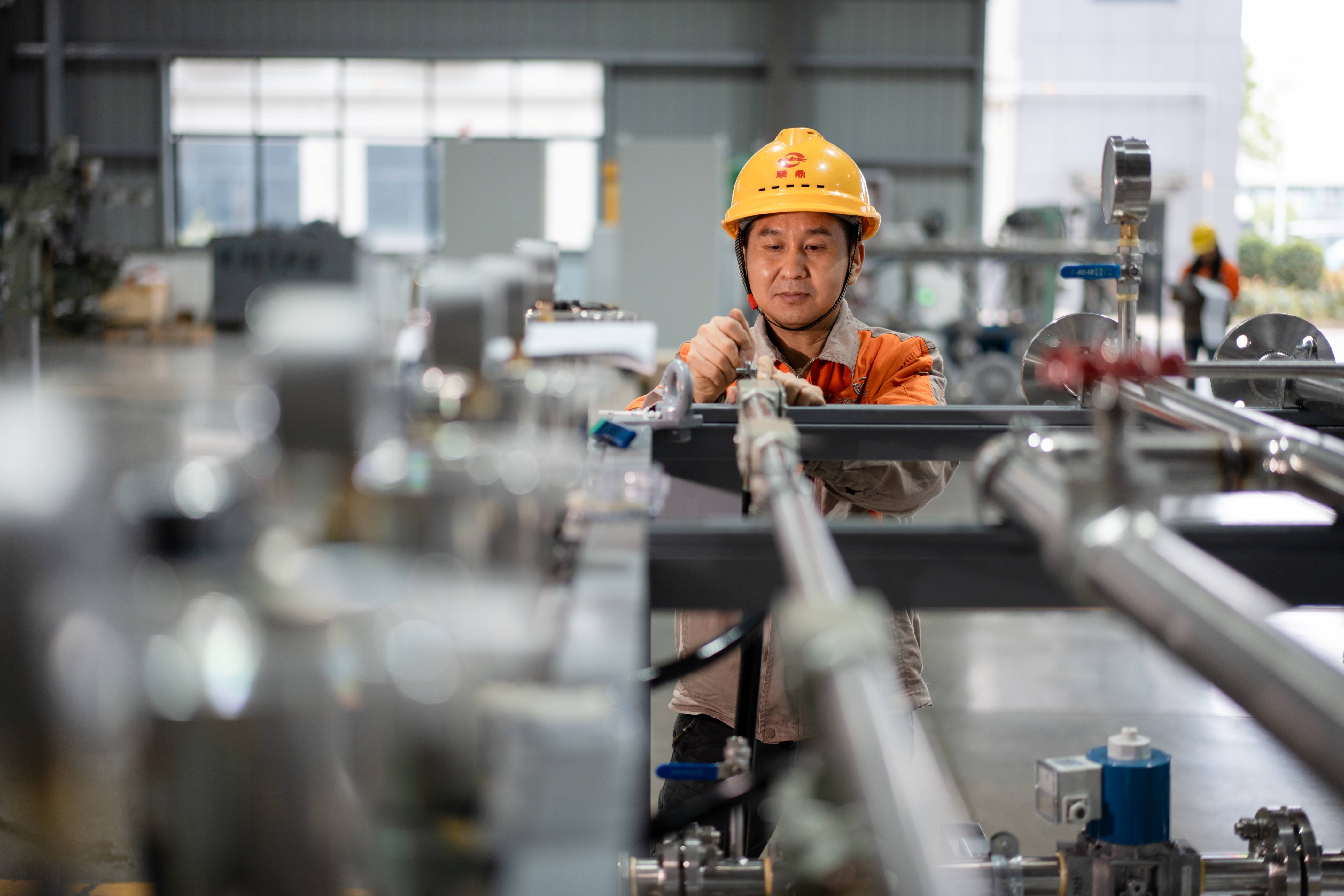










For decades, European and Japanese companies set the standard in glass manufacturing equipment. Names like Grenzebach, Sorg, and LiSEC were the default choice for factories from Brazil to Bangladesh. That is no longer the story in 2026. Chinese glass equipment manufacturers have moved aggressively onto the global stage, and the shift is happening faster than most industry observers expected.
This is not simply a price story. Yes, Chinese manufacturers offer competitive pricing. But the real transformation is technological. Companies like NorthGlass, Landglass, Fuyao Glass, and Xinyi Glass Holdings are winning contracts on the strength of intelligent manufacturing systems, vertically integrated supply chains, and a serious commitment to green production standards. They are not undercutting competitors — they are outcompeting them.
Key Numbers at a Glance
China now accounts for more than 50% of global glass production
The industry's export proportion is forecast to rise from 25% in 2024 to around 35% in 2026
The adoption rate of intelligent machinery in glass deep-processing is projected to exceed 40%
China Glass Expo 2026 spanned approximately 90,000 m² with over 500 companies confirmed The Technology Shift Nobody Saw Coming
The clearest signal that China's glass equipment sector has matured is what was on display at the 35th China International Glass Industrial Technical Exhibition held in Shanghai in April 2026. The event showcased AI-driven furnace control systems, intelligent logistics, automated quality inspection, electrochromic glass, BIPV solutions, and ultra-thin flexible substrates — including 30-micron ultra-thin foldable glass from Triumph Group. These are not prototype curiosities. They are production-ready technologies competing directly with the best Western suppliers.
Looking ahead, the industry is evolving in the direction of "high-end, intelligent, and green," with green and low-carbon transformation, deep integration of intelligent manufacturing, and high-value-added glass products becoming a new track of competition. That framing — from the organizers of the industry's largest annual event — tells you a lot about where Chinese manufacturers see themselves heading.
The glass machinery sector in China is advancing rapidly toward high-end, intelligent production, with companies increasing R&D investments in automated lines and smart control systems, including automatic glass detection machines to ensure precision and quality. What this means practically is that a buyer in the Middle East, Southeast Asia, or Africa can now source a fully automated float glass processing line from a Chinese supplier with the same confidence they once reserved for European builders.
The Companies Leading the Charge
Understanding who is driving this shift requires looking at a handful of companies that have deliberately built global ambitions into their core strategy.
Fuyao Glass Industry Group — Founded in Fuzhou in 1987, Fuyao is arguably the most visible Chinese glass brand outside China. The company has built its competitive edge through heavy vertical integration, targeted localization including its Ohio plant, and sustained R&D in ADAS and HUD optics. Fuyao is the only major player actively adding capacity while others scale back — adding 13.5 million sets of automotive glass capacity in 2025–26. Clients include Volkswagen, General Motors, Tesla, and Toyota. Net profit is projected to reach RMB 9,921 million in 2026, proving the global gamble is paying off.
Xinyi Glass Holdings — Founded in 1988 and publicly listed, Xinyi Glass is one of the world's largest integrated glass manufacturers, with a massive production footprint spanning China and Southeast Asia. Its primary strength lies in unparalleled vertical integration, controlling the production process from float glass raw material to finished processed glass. Xinyi is particularly aggressive in energy-saving architectural glass and solar photovoltaic segments — categories where global demand is surging.
NorthGlass — NorthGlass specializes in deep-processed architectural glass and equipment manufacturing, supplying tempering and bending equipment to factories across more than 100 countries. What separates NorthGlass from earlier generations of Chinese equipment makers is its investment in after-sales service networks and remote diagnostics — historically the Achilles heel of Chinese industrial exports. That gap has largely closed.
Green Manufacturing Is Now a Competitive Weapon
For years, green credentials was a box Chinese manufacturers checked reluctantly. In 2026, sustainability has become a genuine differentiator — and a decisive factor in procurement decisions across Europe and the Gulf states.
Stringent environmental policies are accelerating the shift toward energy-saving and emission-reduction solutions. Innovations include optimizing fuel structures — such as adopting natural gas — and enhancing resource efficiency, with waste glass recovery rates targeted to reach 90%. Low-consumption equipment such as energy-efficient furnaces is becoming mainstream. Key industry trends shaping the Chinese glass market in 2026 include low-E architectural glass, solar and photovoltaic glass, lightweight automotive glass, and intelligent glass solutions. Many Chinese manufacturers are actively investing in sustainability initiatives, digital quality control systems, and international certifications to meet the evolving needs of global B2B buyers.
What international buyers are evaluating in 2026: CE, SGS, ISO 9001, AS/NZS, and ASTM certifications; customization depth for non-standard sizes; export logistics experience; engineering consultation during procurement; and whether a manufacturer has a dual-base footprint across China and Southeast Asia for supply chain resilience.
The AI and Semiconductor Glass Pivot
Perhaps the most strategically significant development in Chinese glass manufacturing right now is the push into semiconductor-grade glass substrates — material that sits at the heart of next-generation AI chip packaging.
BOE Technology Group, the world's largest LCD manufacturer, has pivoted significant R&D resources toward its semiconductor glass division. JCET Group, China's largest outsourced semiconductor assembly and test provider, announced in late 2025 that it had successfully integrated glass core substrates into its 1.6T optical module and Co-Packaged Optics solutions — placing it in direct competition with TSMC's CoWoS technology.
Beijing's mobilization through the China Glass Substrate Industry Technology Innovation Alliance represents more than a technical upgrade — it is a calculated effort to achieve domestic self-sufficiency in the AI supply chain. By bypassing the limitations of traditional lithography through advanced packaging, China aims to maintain its momentum in the global AI race. Glass, in other words, has become a geopolitically strategic material.
Trade Policy and the New Supply Chain Map
Global supply chain restructuring is reshaping how Chinese glass equipment reaches international markets. In 2026, the global glass industry is undergoing a profound transformation, with policy adjustments in China and Southeast Asia fundamentally reshaping the competitive landscape of international trade and manufacturing.
Leading firms are moving upstream by securing critical resources and expanding overseas production — with investments in key mineral sources and manufacturing bases in Southeast Asia — to mitigate supply risks. For international buyers, this dual-base model offers supply security even during periods of trade friction. A factory in Vietnam or Malaysia, operating with Chinese equipment and management, can often navigate tariff barriers while maintaining consistent quality standards.
With advanced technology and large-scale glass manufacturing production in China, exports are expected to increase over the next five years at an average rate of 6.9%. That signals a structural reorientation of where the world's glass equipment originates — not a temporary trend.
Why the Old Narrative No Longer Holds
There was a time when Chinese glass equipment meant acceptable quality at low cost, with a catch somewhere in the fine print — shorter lifespan, harder to service, inconsistent tolerances. That characterization deserves to be retired in 2026.
The companies winning international contracts today are doing so because they have invested heavily in precision engineering, intelligent systems, and customer support infrastructure. Chinese glass companies are now pioneers in R&D, from energy-efficient low-E glass to smart glass with integrated IoT capabilities, while many manufacturers adhere to strict environmental standards producing eco-friendly glass products that support global green initiatives.
What the best Chinese glass equipment manufacturers now offer is a complete value proposition: competitive capital cost, lower total cost of ownership through energy efficiency, integration with smart factory systems, and supply chain optionality through Southeast Asian production footprints. That package is genuinely hard for European and Japanese competitors to match — especially while managing higher labor costs and slower R&D cycles.
The Bottom Line for Global Buyers
The glass equipment market in 2026 is not a binary choice between "premium Western" and "budget Chinese." The more accurate frame is this: Chinese manufacturers have closed the quality gap — in many cases eliminated it — while maintaining real advantages in cost, delivery speed, and systems integration. For procurement teams in construction, automotive, solar energy, and consumer electronics, leaving Chinese glass equipment suppliers off a shortlist is no longer a conservative choice. It is simply leaving performance on the table.

Unlock Your Exclusive Glass Production Solution!