







How Is Glass Wool Made? Manufacturing Process Guide


Glass wool is made by melting a measured mixture of recycled glass and mineral raw materials, spinning the melt into fine fibres, and collecting them into a mat. For bonded rolls and boards, a binder holds the fibres together after curing. The material is then cooled, cut and packaged.
The familiar soft insulation starts as a liquid. Its final properties depend on how that liquid becomes fibres, how evenly the fibres collect, and how the mat passes through the curing and finishing sections. This guide follows the common continuous process for bonded glass wool insulation.
The glass wool manufacturing process at a glance
A glass wool production line connects the hot end, where glass is melted and fiberized, with the downstream equipment that forms and finishes the insulation. Each section must handle the output of the one before it.
1. Preparing the glass batch
Glass wool commonly uses recycled glass, called cullet, together with silica sand, soda ash, limestone and other ingredients selected for the required glass composition. The recipe determines the behaviour of the melt and must suit the fiberizing process.
Cullet supplies glass that has already been melted once. It can reduce demand for virgin raw materials and melting energy, but its suitability depends on composition and cleanliness. A recycled-content percentage from one manufacturer should not be treated as the standard recipe for every plant.
Batch preparation includes storage, weighing, mixing and controlled feeding. Changes in the incoming materials can carry through to the furnace and affect fibre formation. For a new plant, the available cullet supply and its quality belong in the initial process assessment.
2. Melting and conditioning the glass
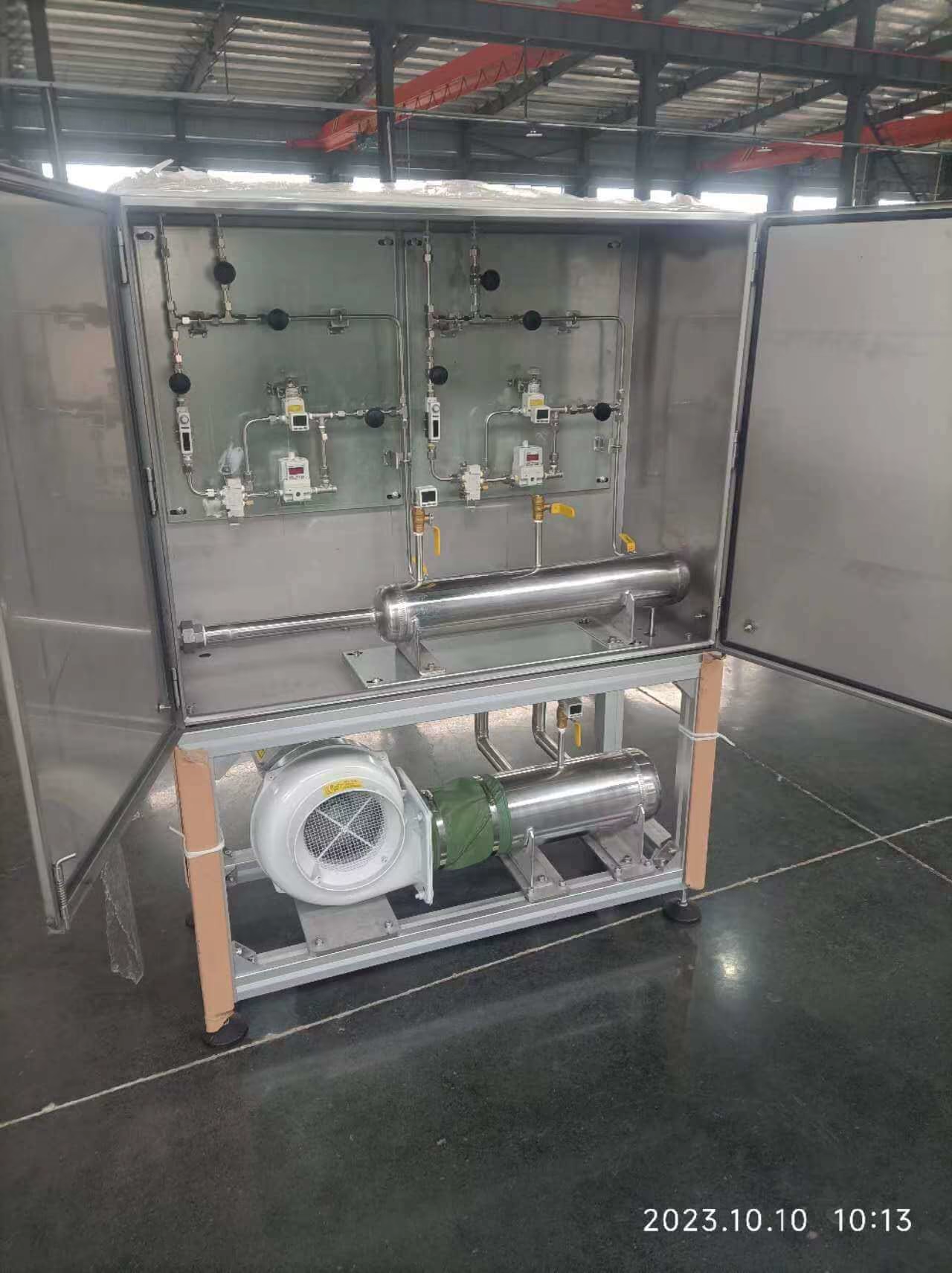
The furnace converts the batch into a glass melt suitable for producing fibres. The melt then passes through a delivery and conditioning arrangement, commonly including a forehearth, before it reaches the spinners.
Melting temperature and the temperature required at the spinner describe different points in the process. A single temperature quoted in a general article cannot serve as the operating specification for an entire line. Glass composition, furnace design and melt throughput all affect the settings.
An oxy-fuel glass melting furnace is one route to assess. It uses oxygen with fuel and requires a suitable oxygen supply. Other melting arrangements exist, so furnace selection should account for local utilities, glass requirements and the downstream equipment. Fuel consumption alone does not establish the total operating cost.
3. Spinning molten glass into fibres
In the centrifugal process, molten glass enters a rotating spinner. Glass passes through small openings and is drawn into fine fibres with the help of gas flow. The result is a loose network of short fibres suitable for insulation.
Melt delivery, spinner condition and operating settings influence fibre formation. A change at the furnace can therefore show up as a problem farther along the line. Raising a machine's rated speed without checking the melt supply and collection section may not increase saleable output.
Sundiatec's glass wool production equipment includes a fiberizing system with a glass wool spinner. Selection should start with the required product and melt conditions. This insulation process differs from drawing continuous glass filaments for reinforcement products.
4. Applying binder and collecting the wool mat
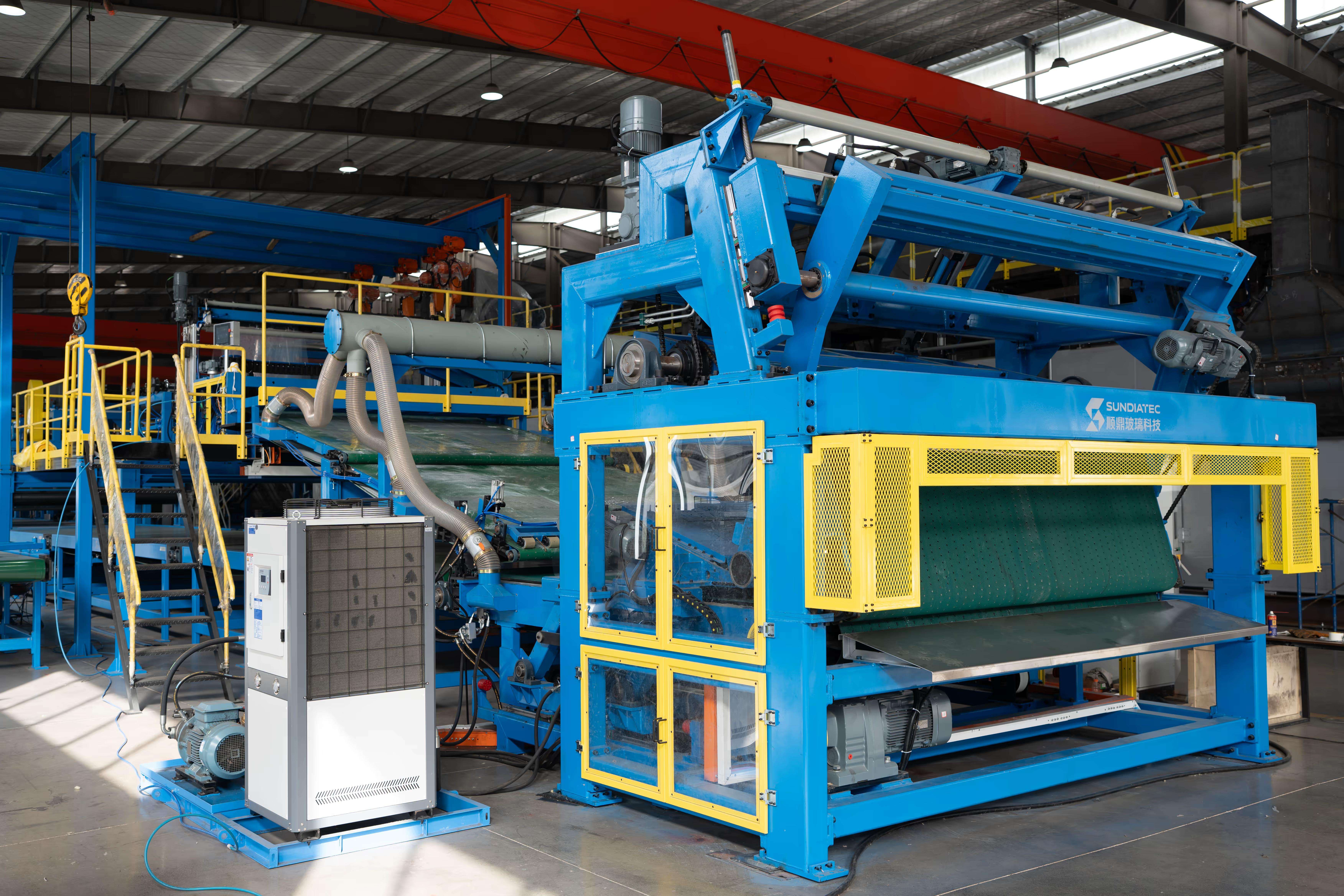
Binder helps the fibres form a stable product after curing. As the fibres collect on the conveyor, extraction airflow assists collection and mat formation. The wool must be distributed across the working width before it enters the curing section.

The glass wool ground level forming system uses a floor-mounted arrangement with negative-pressure ducting. Its role is to collect fibres and form the initial mat. Cleaning access, duct arrangements and the transfer to the next conveyor also need attention during line planning.
Binder chemistry and application rate are product-specific. Some products use different binder systems from others; claims such as formaldehyde-free must be checked against the actual formulation and product documentation. Binder preparation, concentration control and the treatment or recovery of process liquids should be included in the plant scope.
5. Curing the binder and cooling the product
The curing oven heats the formed mat so that the binder sets and holds fibres together. Conveying and thickness-control arrangements maintain the intended profile during this stage. Cooling follows before finishing and handling.

Curing depends on the binder, mat thickness, airflow, temperature profile and residence time. Increasing conveyor speed shortens the time available in the oven. A setting that works for a thin product cannot automatically be carried over to a thicker or different-density product.
The oven does not remelt the glass. It establishes the bonded structure needed for handling and use. When evaluating a proposed line, specify the product range and acceptance requirements together with the oven configuration.
6. Cutting, facing and packaging glass wool
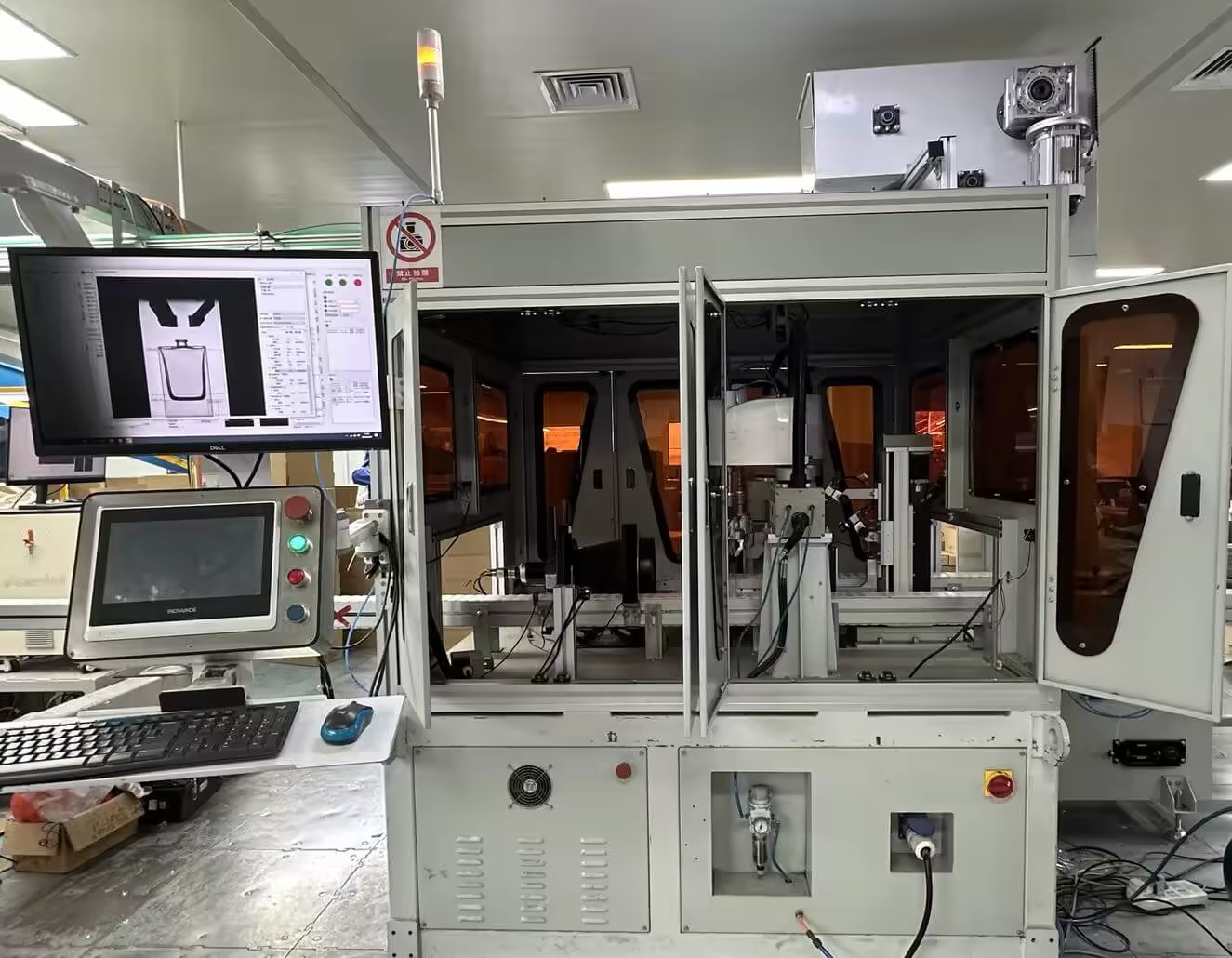
Finishing equipment brings the cured material to the required dimensions. Thickness cutting, edge trimming, longitudinal cutting and cross-cutting perform different jobs. The combination depends on the intended rolls, batts or boards.

Some products receive a facing for a particular application. The facing and its attachment need to be specified alongside the wool product; a facing can affect handling and the performance requirements of the finished assembly.
Suitable roll products pass through compression and winding equipment. Sundiatec's roll-up glass wool machinery uses servo-controlled pre-pressing for this stage. Film wrapping, stacking and pallet handling need their own defined scope.
Compression reduces shipping volume, but the acceptable compression level depends on the product. Recovery after unpacking should be assessed under agreed conditions. Boards and specialised shapes may require a different handling and packing route from flexible rolls.
How manufacturing affects insulation quality
The fibre network retains air within the insulation and helps resist heat transfer. Finished performance depends on the structure and condition of the product, so density alone is not a complete quality measure.
A plant acceptance plan should name the product specification and test conditions. Furnace melting output, fibre output and packaged saleable output measure different things. Comparing them as if they were the same can hide losses or downstream capacity limits.
Recycling, energy and process controls
Recycled glass can reduce raw material demand, while suitable production offcuts may return to the process through an appropriate recovery route. Contamination and binder content must be considered when deciding how recovered material can be used. Recyclability does not mean every offcut or demolition material can go straight into the furnace.
Energy use extends beyond melting. Fiberizing, extraction, curing and other auxiliaries also contribute. A useful plant comparison measures energy per unit of saleable product and states the product mix and operating conditions.
Exhaust treatment and process-water management are part of the manufacturing system. The required equipment depends on the process and local requirements. Neither recycled content nor an oxy-fuel furnace removes the need to assess emissions and treatment responsibilities.
Frequently asked questions
What is glass wool made of?
Glass wool commonly starts with recycled glass and mineral ingredients such as silica sand, soda ash and limestone. The glass is melted and converted into fibres. Bonded insulation products also use binder, and some receive a facing. Exact formulations vary with the manufacturer and product.
Is glass wool the same as fiberglass?
Glass wool is a form of glass-fibre insulation, often called fiberglass insulation in some markets. The broader term fiberglass can also describe continuous fibres and reinforced composite products. Those products have different manufacturing routes, so the intended application matters when discussing equipment.
How does glass wool differ from rock wool?
Both belong to the mineral wool family. Glass wool uses a glass batch, while rock wool uses a different mineral formulation, commonly including rock materials. Their melting and fiberizing arrangements differ. Equipment should be selected for the intended process rather than assumed interchangeable because both products are wool insulation.
Why is a binder used?
Binder joins fibres so the cured product retains its structure during handling and use. Its formulation, distribution and curing conditions affect the finished material. Different binder systems are available; emissions or composition claims need documentation for the particular product rather than a general statement about all glass wool.
Is all glass wool yellow?
No. Product colour can vary with the materials and binder system. Colour alone does not establish thermal performance, fire classification or manufacturing quality. For a purchase or plant specification, use the product's declared properties and supporting test documentation instead of appearance.
Can one line make both rolls and boards?
Some configurations can cover both, but the achievable range depends on forming, curing, cutting and downstream handling. Define density, thickness, dimensions and output for each product. The equipment supplier can then assess whether the proposed configuration covers that range and what changes are needed between products.
Planning a glass wool production project
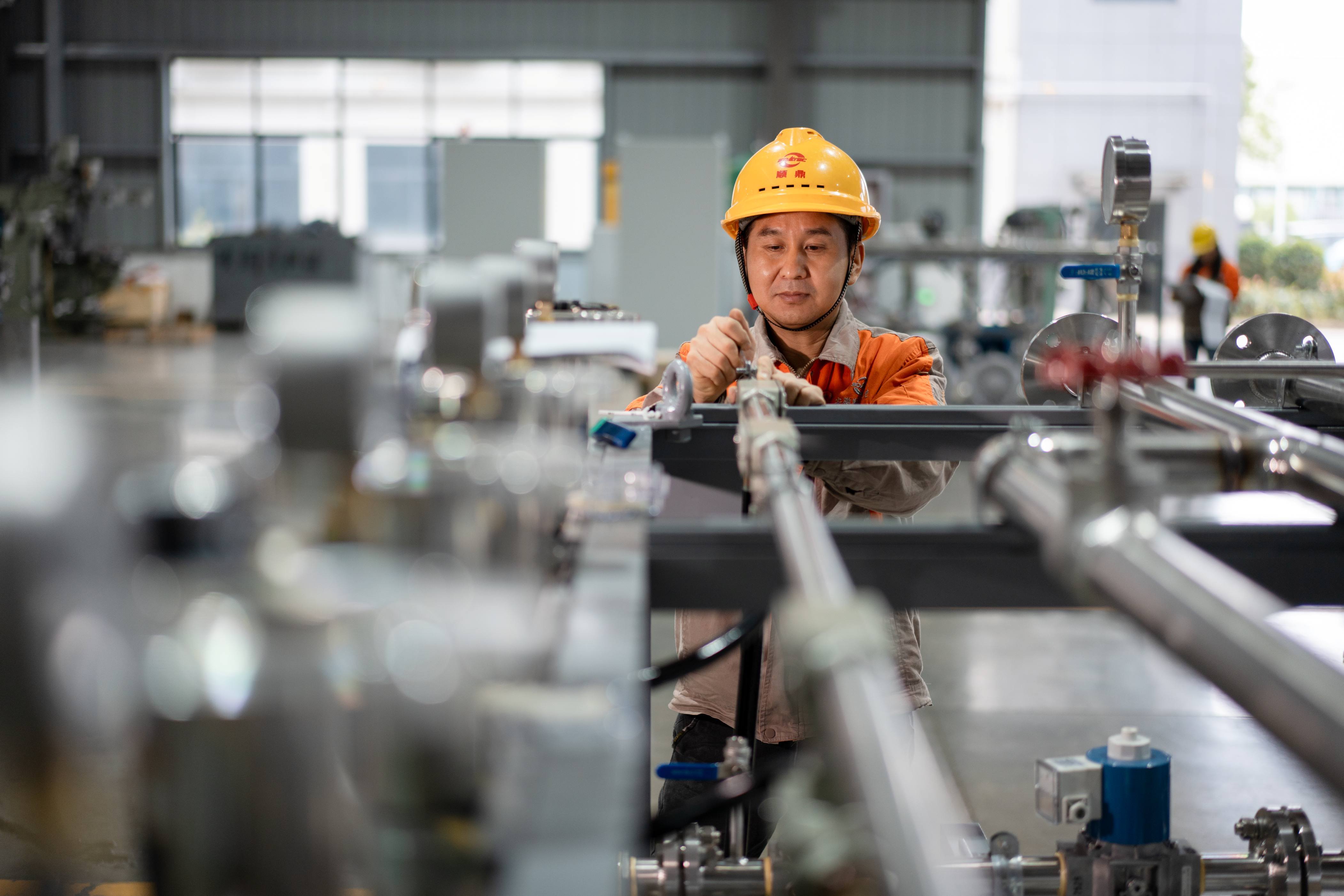
For a discussion with Sundiatec, start with the intended products, target saleable output and project location. Add the available raw materials, energy supply and factory layout. For an existing line, include operating data and the quality or capacity issue you want to address. These inputs give the equipment assessment a practical starting point.