









Rock wool production melts basalt rock at temperatures above 1,500°C, spins the molten material into fine fibers, binds the fibers with resin, and cures them into insulation boards or slabs. The process depends on furnace stability as much as raw material quality. This guide is for plant engineers, procurement teams, and manufacturers planning a new or upgraded line, and it breaks down the process, the equipment, the standards rock wool must meet, and the furnace decisions that affect cost and output most.
What is Rock Wool Production?
Rock wool production is the industrial process of melting basalt rock and converting it into fine mineral fibers used as thermal and fire insulation. The process has four core stages: melting the raw material, spinning it into fiber, binding the fiber mat with resin, and curing it into its final shape.
Rock wool is also called stone wool or, together with glass wool, mineral wool. It differs from glass wool mainly in raw material: rock wool starts from natural volcanic rock and slag, while glass wool starts from recycled glass and sand. This raw material difference is the reason rock wool generally needs a higher melting temperature and achieves stronger fire performance than a typical glass wool production line produces.
How is Rock Wool Made From Rock?
Rock wool is made by crushing basalt and other minerals, melting them in a furnace, and spinning the molten stream into fibers using high-speed rotating wheels. The fibers are then sprayed with a resin binder and cured in an oven to set their final density and strength.
The full sequence follows six steps in a continuous production line:
1. Raw material preparation — basalt, slag, and other minerals are crushed and sized for consistent melting behavior.
2. Melting — the material is heated in a furnace until fully molten, which is the most energy-intensive stage of the process.
3. Fiberization — molten rock is fed onto spinning wheels or discs that use centrifugal force to draw it into fine fibers.
4. Binder application — resin and oil are sprayed onto the fiber stream to hold the mat together and control dust.
5. Curing — the fiber mat passes through a curing oven that sets the resin and fixes final density and strength.
6. Cutting and finishing — the cured mat is cut into boards, slabs, or rolls and packaged to order.
What Temperature is Needed to Melt Rock Wool Raw Materials?
Rock wool raw materials typically melt at temperatures above 1,500°C, and industry sources report melting behavior continuing up to and beyond 1,600°C depending on the exact basalt and slag mix used. This is higher than most glass wool production, which generally runs at a somewhat lower melting temperature because it starts from recycled glass rather than raw volcanic rock.
That higher melting point is the direct reason rock wool production is more energy-intensive per ton than glass wool. In 2023, energy costs made up an estimated 28% to 32% of total production expenses in the stone wool industry, according to industry market analysis. Furnace design, refractory quality, and combustion efficiency all directly affect where a plant lands in that range, which is why furnace technology choice is a cost decision, not just an engineering one.
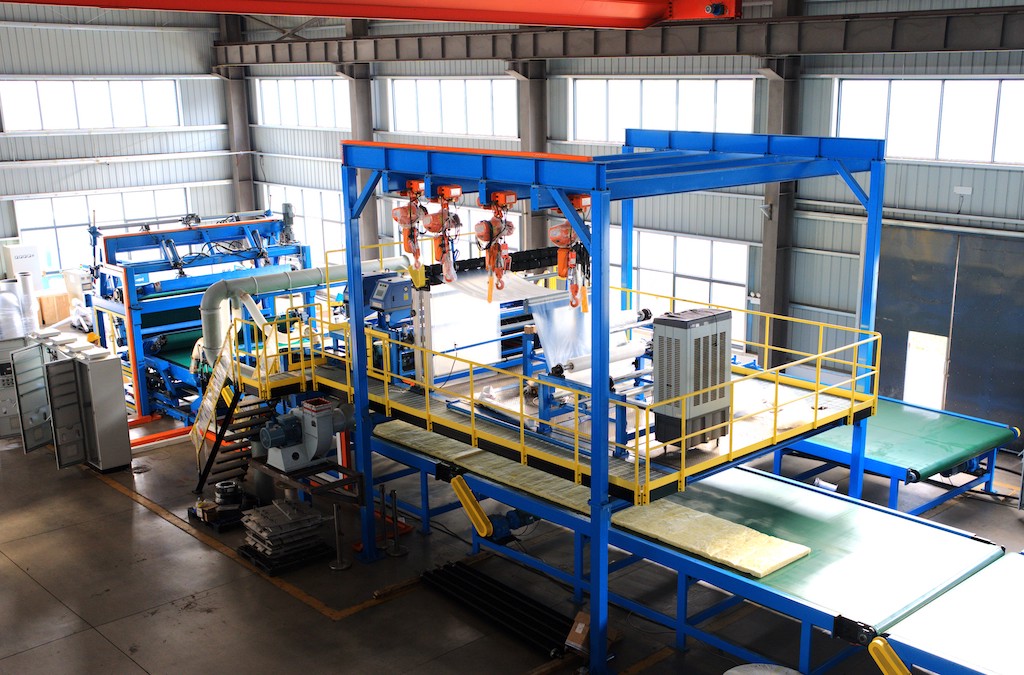
What Equipment is Used in a Rock Wool Production Line?
How is Rock Wool Different From a Glass Wool Production Line?
A glass wool production line and a rock wool line share the same basic fiberization and curing principles, but furnace design differs because of the raw material and temperature gap. Plants considering both product lines usually need separate furnace specifications rather than a single shared design.
Why is Rock Wool Fire Resistant?
Rock wool is fire resistant because its mineral composition contains no combustible organic material, so it does not burn, melt, or release significant smoke at normal fire temperatures. Rock wool typically achieves a Class A1 rating under EN 13501-1, the highest non-combustible classification used across Europe and widely referenced in Asian building codes including China's GB 50016 standard.
In the United States, rock wool products generally pass ASTM E136 non-combustibility testing and achieve a Class A rating under ASTM E84 surface-burning tests, with flame spread and smoke-developed indexes near zero. This combination of standards is why specifiers in industrial, healthcare, and high-rise construction frequently require rock wool specifically, rather than accepting any mineral wool product.
What is a Glass Furnace Turnkey Project, and Does It Apply to Rock Wool Lines?
A glass furnace turnkey project is a supply arrangement where one contractor handles furnace design, fabrication, shipping, installation, and commissioning as a single package, rather than the buyer coordinating multiple vendors. This model applies directly to rock wool lines because the melting furnace is engineered using the same combustion, refractory, and control principles used in glass furnace projects.
Manufacturers planning a new rock wool line increasingly request the same turnkey structure used in glass furnace projects, since it reduces coordination risk between furnace design, fiberization equipment, and curing systems that all need to work together from day one. A turnkey partner with furnace experience across both industries can also apply lessons from energy efficient glass furnace design directly to rock wool furnace efficiency.
Why is China Investing in Energy Efficient Glass Furnace Technology for Mineral Wool?
China is investing in energy efficient glass furnaces and melting technology because energy savings and emission reduction in the building materials sector are an explicit part of the country's dual carbon goals. This policy direction extends into furnace technology choices across both glass and mineral wool production.
China industrial policy offers subsidies for energy-saving, environmentally friendly kilns, including all-electric melting and electric-boosting retrofits, which contributed to a 12% increase in furnace rebuild projects in 2023. Asia-Pacific already holds the largest regional share of the global mineral wool market, so furnace efficiency improvements made in this region have an outsized effect on total industry energy use. For manufacturers sourcing equipment, this means furnace technology decisions increasingly intersect with subsidy eligibility and compliance timelines, not just raw fuel cost.
How is Quality Controlled During Rock Wool Production?
Quality in rock wool production is controlled by monitoring fiber diameter, binder content, and mat density at multiple points along the line, with increasing use of automated inspection rather than manual sampling alone. A glass inspection system, originally built for detecting cracks and dimensional defects in glass containers, uses the same camera-and-sensor approach that mineral wool producers are adapting for mat density and surface defect checks.
Manual sampling still has a role, particularly for binder cure verification, but it cannot catch every defect at modern line speeds. Plants that have adopted inline inspection report catching density and surface defects earlier in the process, reducing the volume of off-spec material that reaches cutting and packaging.
Pros and Cons of Rock Wool as an Insulation Material
Pros
• Highest non-combustible fire rating (EN 13501-1 Class A1)
• Strong sound absorption alongside thermal insulation
• Withstands sustained high temperatures without structural breakdown
• Moisture resistant compared to several organic insulation alternatives
Cons
• Higher production energy cost than glass wool, due to higher melting temperature
• Heavier than glass wool, which can affect shipping cost and installation labor
• Not the best fit for every application — lightweight residential batts sometimes favor glass wool on cost grounds
How Do You Choose Equipment for a New Rock Wool Production Line?
Four factors should drive equipment selection for a new or upgraded line:
1. Furnace technology fit - confirm whether a fuel-fired, oxy-fuel, or all-electric furnace design best matches your local energy prices and emissions targets.
2. Turnkey vs. multi-vendor supply — decide whether a single glass furnace turnkey project-style contractor or separate equipment vendors better fits your in-house engineering capacity.
3. Refractory and campaign life — ask for the specific refractory grades used in the melting zone and the expected years of operation before a rebuild is needed.
4. Quality control integration — confirm whether inline inspection, similar to a glass inspection system, can be integrated into the fiberization and curing stages.
Frequently Asked Questions
What's the difference between rock wool and glass wool?
Rock wool is made from basalt and volcanic rock and melts above 1,500°C, typically achieving EN 13501-1 Class A1 fire rating. Glass wool is made from recycled glass and sand, melts at a somewhat lower temperature, and often achieves a slightly lower fire classification.
Is rock wool production more expensive than glass wool production?
Generally yes, mainly because of higher melting temperatures and energy use. Energy costs made up an estimated 28–32% of total stone wool production expenses in 2023.
Can a glass furnace manufacturer build rock wool melting furnaces?
Yes. The melting, refractory, and combustion engineering principles overlap closely enough that manufacturers experienced in energy efficient glass furnace design frequently apply that expertise to rock wool furnace projects.
What fire rating does rock wool typically achieve?
Rock wool typically achieves a Class A1 rating under EN 13501-1 in Europe, Class A under ASTM E84 in the US, and meets China's GB 50016 non-combustible classification.
Does rock wool production use the same quality control as glass production?
The principles are similar. Camera-based inspection systems originally developed for glass defect detection are increasingly adapted for mineral wool mat density and surface defect checks.
Is Asia-Pacific the largest rock wool production region?
Yes, Asia-Pacific holds the largest regional share of the global mineral and rock wool market, driven by construction growth and industrial demand concentrated in China and India.

Unlock Your Exclusive Glass Production Solution!