










Before comparing two capacity figures, check where each supplier measures output. A furnace rating covers melting. Finished glass wool has also been through fiber formation, collection, curing, cutting and packaging. The quotation should make clear which of these stages its capacity figure covers.
That distinction matters when the purchasing team puts several quotations side by side. One proposal may describe tonnes of molten glass per day, while another gives the weight of finished products. Even where both use tonnes per year, they may assume different operating hours or product specifications. Keep the original figures, but ask for the calculation behind each one before deciding which line offers more usable output.
There is a similar detail in the equipment list. Some of the centrifuges supplied with a line may be standby units. For the capacity calculation, the relevant number is how many will operate at the same time. The quotation also needs to explain what happens when a unit is taken out of service: whether the stated output can be maintained, whether output falls, and what work is involved in returning to normal operation.
The furnace supply scope and performance requirements are covered separately in our furnace supplier checklist.
Product mix and line speed
A lightweight blanket and a denser board may have similar hourly output by weight but require different line speeds. Width and thickness affect the comparison too. For the products you expect to make most often, put density, thickness, width and length together, then get an output figure for each specification. Separate maximum values on a data sheet leave these combinations unresolved.
List occasional products separately in the enquiry, so the supplier can distinguish them from the regular production requirements. They still need an output figure if you expect to sell them. A tick confirming that a line can produce a particular specification does not tell the production team how much time to allocate to an order.
Keep the units visible. Tonnes per hour describe mass output, while square metres per hour describe the area of product being made. With the same finished thickness, a higher-density product weighs more per square metre. A change in the reported tonnage therefore needs to be read alongside the product specification. The same caution applies to rolls per minute if the roll length or width changes between quotations.
The proposed speed then has to work through the rest of the line. Curing conditions depend on the product thickness, density and binder requirements; the conveyor's mechanical speed range cannot establish those conditions. Ask which product and binder the proposed operating speed is based on, and how the curing result will be checked. A speed shown on the machine specification is only useful once it is tied to the product you intend to sell.
Further along, board length determines how often the cutter has to cycle. Shorter boards mean more cuts per minute at the same line speed. Cutting capacity and dimensional tolerance therefore need to be specified together for the actual board sizes. Where several strips are cut across the width, the downstream handling arrangement also needs to be explained. The equipment receiving those pieces has to work with that cutting pattern.
Facing adds another question where it is part of the intended product. Establish whether the quoted output includes the facing operation, and whether it takes place on the main line or separately. If the facing equipment is outside the supply scope, its required rate and connection to the rest of production still need to be agreed. Otherwise, two proposals may appear to cover the same finished product while leaving different work to the buyer.
What leaves the packaging line
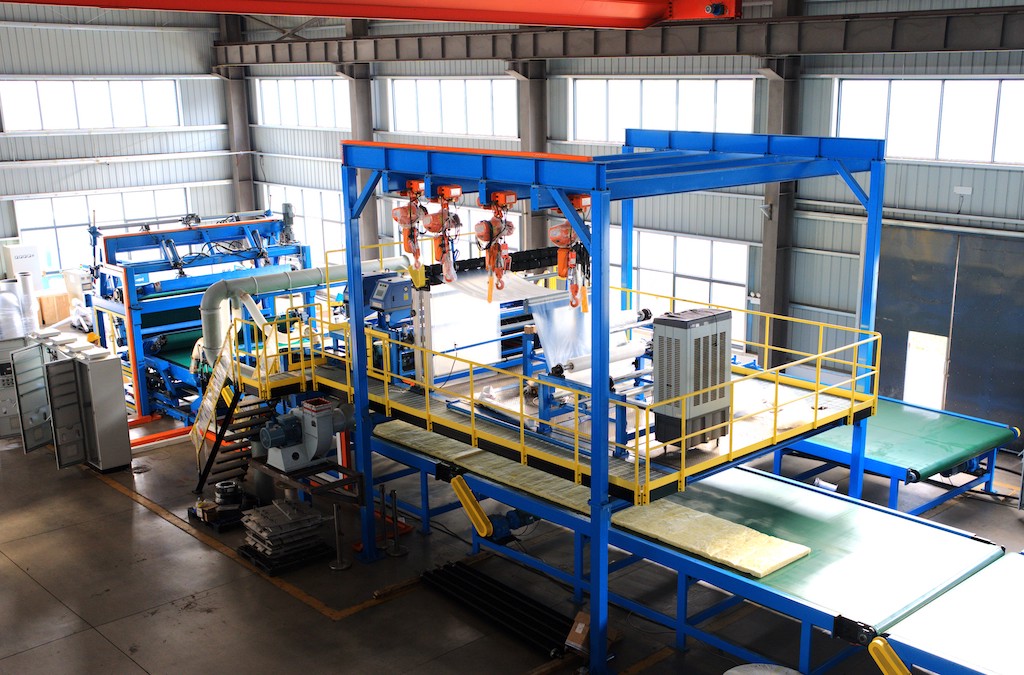
Roll production brings another set of limits into the calculation. Packaging equipment has to handle the blanket dimensions and finished roll size at the required rate. Roll-up speed and finished rolls per minute measure different things. Follow the proposed sequence through winding, wrapping or bagging, and removal of the finished package. Where labelling and pallet handling are included, their rates belong in the same review.
The division of work should be visible in the layout and equipment list. A quotation may stop at the discharge conveyor, leaving the buyer to arrange the next handling step. That can be a perfectly workable scope, provided the staffing, space and equipment needed at that point have been allowed for. It becomes a capacity problem if the receiving arrangement cannot clear products at the proposed rate.
A quoted compression ratio also needs a product specification and a clear basis of calculation attached to it. Density, thickness and binder content affect the result, so the maximum shown for one blanket should not simply be applied to the whole product range. The discussion should include the product after unpacking. Agree on the conditions and duration of compressed storage, the time allowed for recovery and the thickness checks needed for the intended product.
Output needs a quality boundary too. Material entering the cutting section is not necessarily the same quantity as accepted finished product leaving packaging. Clarify how edge trim, rejected pieces and material produced during adjustments are treated in the capacity calculation. If material is recovered for reuse, record that separately from saleable output. Otherwise, the same material could be counted as production before it has become a product the buyer can ship.
The annual output figure
An annual capacity estimate needs a production schedule behind it. Begin with the hourly output for each main product and the hours allocated to that product. A line expected to make several specifications cannot spend the entire year at the best hourly rate quoted for just one of them. The planned mix is especially worth reviewing when the sales forecast includes both long runs of standard products and frequent smaller orders.
Changeovers deserve their own allowance. Moving between thicknesses, densities, widths or packaging formats may involve different adjustments. Ask the supplier to describe the changeovers relevant to your product list, including how output during the adjustment period is treated. A general statement that the line is flexible does not tell the production team how much time to reserve.
Maintenance, cleaning and other planned interruptions also need to be reflected in the available hours. Be clear about what the supplier means by effective operating time. If the hourly rate already represents accepted finished output, it should not be reduced again using a yield allowance for losses already included. Conversely, a rate measured before trimming and rejection needs those losses accounted for before it is used in a sales forecast.
For a new plant, keep the first-year plan separate from the estimate for established operation. Commissioning, operator training and product trials need time in the schedule. Agree which activities must be complete before a capacity test can begin, and which assumptions the annual estimate makes about staffing and site readiness. This avoids treating a full year of established production as a promise for the months immediately after installation.
Agreeing how capacity will be demonstrated
The performance test should be discussed while the quotation is still being developed. Choose the product specifications to be tested, the duration of each run, the point at which output will be measured and the quality checks that determine acceptance. A short run on one easy specification does not answer questions about every product in the planned range. Where several products matter commercially, agree which of them the test will cover.
The test record should make the result understandable afterwards. Alongside the output figure, record the product dimensions, density, operating time, rejected quantity and any interruptions. Decide in advance how a stopped run will be handled and whether adjustments require a restart of the measurement period.
Check the site conditions attached to the proposed performance as well. The supplier should state the utility requirements and the raw material, binder and packaging specifications assumed in the proposal. Any items provided by the buyer need an agreed responsibility and completion date before the test is scheduled.
By this stage, the proposal should connect the equipment configuration to a defined product mix, an operating schedule and an acceptance method. Keep that basis with the final equipment list. If a machine, product specification or supply boundary changes during negotiations, the associated capacity calculation needs to be reviewed with it.
To discuss a glass wool production line with Sundiatec, send your main product specifications, annual output target and packaging requirements. Include the products you expect to make most often and any equipment already available at your site. Those details give the discussion a practical starting point before the furnace, fiber-forming and downstream equipment are selected.


Unlock Your Exclusive Glass Production Solution!